Older apartment buildings and mixed-use properties across Western Pennsylvania offer character, durability, and long-term investment value. But when it comes to security, many of these properties were built in a very different era. Long before today’s expectations for video surveillance, controlled access, remote monitoring, and integrated life-safety systems, builders focused on structure and utility rather than modern security infrastructure.
That is why multi-unit building security Pittsburgh property owners need today often requires more than a simple equipment swap. In many cases, upgrading security in older buildings means working around masonry walls, aging electrical systems, limited wiring paths, and layouts that were never designed for cameras or electronic access control.
For property managers, investors, and facility teams in Pittsburgh and Johnstown, the challenge is not whether to upgrade security. It is how to do it efficiently, with minimal disruption to tenants and without compromising the building itself.
Many Pittsburgh apartment buildings were constructed 50 to 100 years ago, and some are even older. These buildings were not designed with structured cabling, surveillance coverage plans, or centralized access control in mind. As a result, security upgrades often involve adapting modern technology to infrastructure that was never meant to support it.
Tenant expectations have also changed. Residents and property owners now expect secure entry points, reliable video coverage in common areas, and faster response to security concerns. At the same time, building owners must preserve the appearance and function of older properties while managing budgets and minimizing interruption.
This creates a design challenge that is especially common in older apartment complexes, converted mixed-use properties, and historic buildings throughout Pittsburgh and Johnstown.
One of the biggest obstacles when retrofitting security systems in older buildings is wiring.
Older multi-unit properties often lack the conduit pathways needed for structured cabling. Running new cable through thick plaster, stone, brick, or concrete can be difficult and invasive. In some buildings, wall cavities are limited or inconsistent. In others, there may be little room in mechanical spaces to support new security infrastructure.
Electrical limitations can also complicate the project. Older panels may not have the capacity needed for expanded surveillance, access control, or integrated alarm systems. That is especially important when adding devices across multiple floors or common areas.
There is also an important difference between traditional wired systems and newer IP-based security solutions. While conventional systems may require more extensive cabling, modern technologies can offer more flexibility, including:
With the right design approach, these solutions can reduce installation disruption and help property managers modernize security without unnecessary demolition or reconstruction.
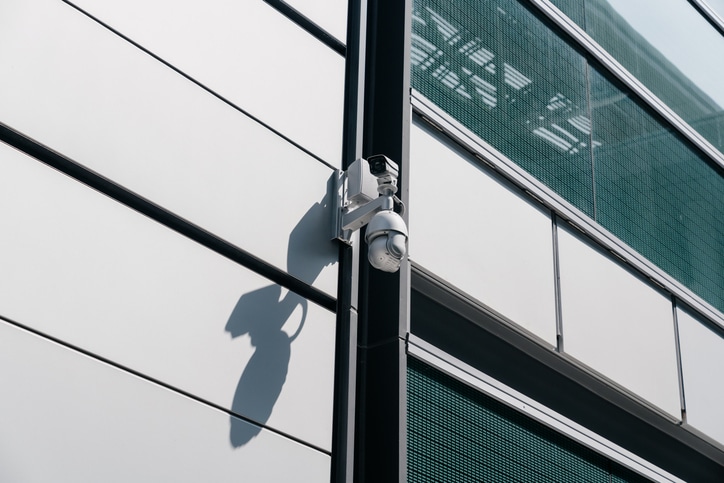
Surveillance design in older buildings is rarely straightforward. Narrow hallways, enclosed stairwells, decorative architectural features, and unusual room configurations can all limit where cameras can be mounted.
In some properties, there are few practical mounting surfaces. In others, owners may want to avoid visible equipment that affects the appearance of a historic lobby or hallway. Lighting is another issue. Dim entries, aging fixtures, and uneven natural light can all affect video quality if the system is not designed correctly.
Blind spots are especially common in shared spaces such as:
This is where professional planning becomes essential. Effective multi-unit building security Pittsburgh properties require depends on more than placing cameras wherever space allows. It requires careful assessment of tenant movement, entry patterns, visibility, lighting conditions, and risk areas to ensure useful coverage rather than a false sense of security.
Access control can significantly improve apartment and mixed-use property security, but older buildings often present structural and operational hurdles.
Aging door frames may not easily support electric strikes, maglocks, or other modern locking hardware. Some properties have multiple entrances added over time, with inconsistent doors, vestibules, or exit pathways. Fire exits and code requirements must also be considered when adding controlled access points.
At the same time, property managers need to balance security with convenience. Tenants want secure access, but they also expect systems that are easy to use and reliable. A poorly planned setup can create frustration, maintenance issues, or compliance concerns.
Modern access control systems can often be layered onto older buildings through a tailored approach that may include:
Instead of forcing a one-size-fits-all system into an older structure, the goal should be to design around the building’s existing conditions while improving control and visibility.
For many property managers, the biggest concern is not the technology itself. It is how the work will affect residents.
Security upgrades in occupied buildings require careful coordination. Access to common areas, stairwells, utility spaces, and entrances must be managed without creating confusion or inconvenience. Noise, temporary access changes, and short service interruptions can all lead to tenant complaints if the installation is not handled properly.
A phased approach often works best. That may involve completing work floor by floor, scheduling installations during lower-traffic hours, or prioritizing common-area upgrades before unit-level devices. Clear communication is also important so tenants know what to expect and when.
A well-planned rollout can help reduce disruption by focusing on:
For owners of occupied apartment buildings, thoughtful project planning can make the difference between a smooth upgrade and an avoidable operational headache.
Security upgrades in older buildings often overlap with life-safety concerns. In many cases, owners evaluating intrusion detection or access control should also review the status of their fire alarm systems.
Older buildings may need updated fire detection devices, improved notification equipment, or better integration between fire alarms and other building systems. Coordinating intrusion detection with fire monitoring can improve overall building protection while simplifying system oversight.
Code compliance is another critical factor. Security equipment must be designed and installed in a way that supports safe egress, proper life-safety operation, and current local requirements. This is especially important in apartment buildings, mixed-use properties, and facilities with multiple entrances and common spaces.
For many properties, security modernization is a good opportunity to look at the bigger picture and ensure both security and fire protection systems are aligned with current needs.
The good news is that older buildings do not need entirely new construction to support better security. Today’s technology offers practical ways to improve protection while working within real-world building constraints.
Common solutions include:
These options can be especially valuable for apartment building security systems Pittsburgh property owners are considering in older or historic buildings. Rather than starting from scratch, a customized design can work with the building’s limitations while still delivering modern functionality.
Off-the-shelf security products may seem attractive at first, but they often fall short in older multi-unit properties. Complex layouts, structural obstacles, code requirements, and tenant-use patterns demand more than basic equipment selection.
Professional security design starts with a thorough assessment of the property. That includes identifying vulnerable access points, evaluating existing infrastructure, understanding future expansion needs, and recommending systems that fit the building instead of fighting against it.
This matters because a properly designed system can help owners:
At Security Systems of America, we understand that no two older buildings are alike. Our team designs customized commercial security solutions around real-world conditions, integrating intrusion detection, video surveillance, access control, and fire alarm systems in ways that support both security and day-to-day operations.
Older multi-unit buildings across Pittsburgh and Johnstown can absolutely be upgraded for modern security. Even in century-old properties, the right combination of planning, technology, and installation strategy can improve protection without unnecessary disruption or structural compromise.
Whether the challenge is difficult wiring, limited camera placement, aging entry doors, or life-safety coordination, the solution starts with a system designed for the property as it actually exists.
For property managers and owners, the goal is not just adding equipment. It is building a security strategy that protects tenants, supports operations, and respects the realities of older construction.
If you are planning security upgrades for an older apartment building, mixed-use property, or multi-family complex, Security Systems of America can help. Our team has decades of experience designing and installing customized security and life-safety systems for commercial properties throughout Pittsburgh, Johnstown, and the surrounding region.
Contact Security Systems of America today to schedule a consultation and learn how we can help you modernize your property with professionally designed intrusion detection, video surveillance, access control, fire alarm integration, and 24/7 monitoring solutions tailored to your building.