
For many small business owners in Johnstown, security decisions often come down to cost and convenience. With more self-monitored and app-based alarm systems on the market, it’s reasonable to wonder whether professional monitoring is truly necessary, especially when insurance requirements are part of the equation.
The reality is that monitored security systems are not always explicitly required by insurance carriers, but they are often strongly preferred and, in some cases, effectively expected depending on the property type, business operations, and risk profile. Understanding the difference between monitored and self-monitored systems can help Johnstown business owners reduce risk, avoid unpleasant surprises during underwriting or renewal, and make a more confident long-term decision.
Commercial insurance is fundamentally about risk. When insurers evaluate a small business policy, they consider how likely a loss event is (such as burglary, vandalism, or after-hours break-ins) and how severe that loss could be. A security system matters because it can reduce the likelihood of an incident, and just as importantly, it can influence how quickly an incident is detected and responded to.
From an insurer’s perspective, a system that reliably detects an incident and triggers a verified response is more meaningful than one that simply sends a notification and depends on someone being available, awake, and able to act. That’s where professional monitoring often becomes a key factor in the overall risk picture.
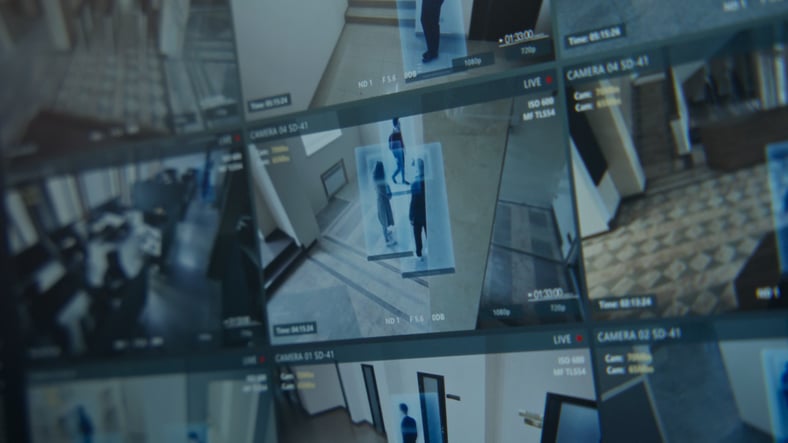
The biggest difference between monitored and self-monitored systems is who is responsible for response. With a self-monitored system, alerts are sent to a phone, tablet, or computer. If the notification is missed, delayed, or ignored, there may be no response at all. With a monitored system, signals are routed to a professional monitoring center that is staffed 24/7. When an alarm event occurs, the monitoring center follows established procedures to verify and dispatch help when appropriate.
For many Johnstown small businesses, the practical difference shows up after hours. If a business is closed overnight or on weekends, monitoring reduces the chance that an event goes unaddressed until the next morning, when the damage and loss may already be done.
In many cases, monitoring is not a universal “must-have” requirement written into every policy. However, insurers may require specific protective safeguards for certain business types, occupancy situations, or locations, and professional monitoring can be part of that conversation. Even when monitoring is not strictly required, underwriters may view monitored systems more favorably because they demonstrate proactive risk management and improve response reliability.
The safest way to think about this is: monitoring may not be mandatory for every small business, but it can be a differentiator in underwriting, renewal discussions, and how your business’s risk is perceived. If your business stores valuable inventory, handles cash, operates with limited staff, or sits vacant for long stretches of time, monitoring becomes more relevant.
Some business owners assume that because a policy doesn’t explicitly state “must be monitored,” self-monitoring is automatically acceptable. In reality, insurance expectations often revolve around effectiveness, not just whether equipment is installed. If a loss occurs and it becomes clear the business relied on alerts that no one responded to, it can create complications and uncomfortable questions during the claims process.
This connects to a broader decision many owners face: not just what kind of system to choose, but whether their protection is sufficient for their situation. For more perspective, see SSA’s related post on whether a business needs a security system.
One of the most overlooked benefits of professional monitoring is documentation. A monitored system can produce records showing when an alarm signal occurred and what actions were taken. That can be useful if you need to show that your business took reasonable steps to protect the premises and respond appropriately.
While no article can promise how an insurer will handle any specific claim, documented alarm activity and response procedures can strengthen your overall risk management posture. It also supports the bigger-picture value of investing in professional protection over the long term. SSA explores this in more detail in the long-term ROI of commercial security systems.
“Phone alerts are enough.” Alerts are helpful, but they are not a response plan. Notifications can be missed, delayed by weak signal, or received when you’re unavailable. Even when you do receive an alert immediately, you may still be left deciding whether it’s a false alarm, what to do next, and whether it’s safe to respond in person.
“Monitoring is only for large businesses.” Smaller businesses can be more vulnerable because they often have fewer layers of protection, fewer staff members present, and less redundancy. Monitoring can help close gaps created by limited onsite coverage.
“Self-monitored is cheaper, so it’s smarter.” The lowest monthly cost doesn’t always reflect the real cost of risk. If monitoring helps reduce loss severity, speeds response, and supports better accountability, it can pay off in ways that are easy to overlook when comparing prices.
Johnstown’s business landscape includes a mix of older commercial buildings, mixed-use properties, and small standalone facilities. These environments can introduce challenges such as inconsistent lighting, unusual entry points, older construction materials, and areas that are hard to cover without proper system design. The right system is not just about equipment. It’s about placement, configuration, maintenance, and reliable monitoring practices that fit how your business actually operates.
Working with a local, experienced provider helps ensure your system is designed for real-world performance, not just a basic install. It can also help you align your security plan with insurance expectations without overbuying or leaving critical gaps.
If you’re unsure whether your current system aligns with insurance expectations, a professional evaluation can provide clarity. Monitoring may not be required for every small business, but it is often an important factor in improving response reliability and strengthening your overall risk posture.
Security Systems of America provides monitored security systems for small businesses in Johnstown, PA, including intrusion alarms, video surveillance integration, and 24/7 professional monitoring designed to support real-world operations.
Contact SSA to request a no-obligation monitoring evaluation tailored to your business and your property.