
For many small retailers, a basic door alarm was the first step toward protecting the business. It made sense. Door alarms are simple, familiar, and relatively easy to understand. They can alert an owner when someone enters after hours and provide a basic layer of intrusion protection.
But retail risks are no longer limited to a single point of entry or a simple break-in. Store owners today need to think about visibility, response time, after-hours activity, employee access, and what happens when they are not on-site. That is why more businesses are moving toward retail security systems. Johnstown, PA retailers can rely on for broader protection and better day-to-day awareness.
This shift does not mean door alarms no longer have value. It means small retailers are recognizing that a single device at the front door is not enough to address the realities of running a modern business. Layered security, including intrusion detection, video surveillance, and professional monitoring, provides business owners with more than just an alert. It gives them context, documentation, and a stronger foundation for protecting both inventory and operations.
Many small retailers begin with basic door alarms because they are accessible and straightforward. For a new store owner or a business operating on a tight budget, that kind of system can be a practical place to start.
Door alarms are designed primarily to detect when a door opens unexpectedly. In some cases, they can help discourage unauthorized entry or notify the owner that something may be wrong, providing simple after-hours protection, which can be useful.
The problem is that retail security concerns often go well beyond the front door. Theft can happen during business hours, in low-visibility sections of the store, through side or rear entrances, or in stockrooms where inventory is stored out of customer view. If an alarm only tells you that a door was opened, it does not tell you what happened next, who was involved, or whether the event was actually a threat.
That is one reason so many businesses are looking into retail security systems, and store owners are adopting them as part of a more complete security plan. These systems are designed to provide broader awareness, not just a single alert at a single point of access.
It is important to look at door alarms fairly. They do have benefits, especially for small retailers just starting to think about security.
A basic door alarm can be affordable, easy to use, and effective for simple intrusion alerts. It can notify a business owner that someone opened a protected door after hours. In some settings, that may be enough to provide a first layer of defense.
At the same time, the limitations are clear.
One of the biggest drawbacks is the lack of visual verification. A door alarm may tell you that a door opened, but it cannot show you who entered, whether the person was authorized, or what happened inside the store.
Coverage is also limited. A basic alarm may focus only on the front entrance, leaving secondary doors, interior movement, stock areas, and other vulnerable spaces unmonitored.
Another limitation is the lack of context. If an alert goes off, the owner may have no way to know whether it was a real intrusion, an employee issue, or a false alarm caused by a simple mistake.
Finally, many basic systems depend heavily on the owner’s availability. If you are asleep, traveling, or simply unable to respond quickly, the system may not offer much support beyond the initial alert.
That is why many business owners looking at small business security systems in Johnstown are choosing solutions that build on the value of door alarms rather than relying on them alone.
Retail security works best when it is layered. That means using multiple tools together so the system can detect activity, provide visibility, and support a timely response.
This matters because theft is not limited to a forced entry after hours. Loss can happen in different ways and at different times. It may involve shoplifting during normal business hours, unauthorized access to inventory areas, or suspicious activity that only becomes clear as patterns emerge.
A layered system helps address both internal and external risks. Instead of relying on a single device, the business combines intrusion detection, video surveillance, and monitoring to achieve broader coverage.
This approach helps fill the gaps left by door alarms. An intrusion detection system can detect unauthorized activity across multiple locations. Video surveillance can show what happened. Monitoring can help ensure alerts are not missed when the owner is unavailable.
For many retailers, modernization is not about adding complexity. It is about putting the right pieces in place so the business is not relying on guesswork when something goes wrong.
Modern intrusion detection systems used by retail businesses are designed to do more than monitor a single entry point. They expand awareness across the store and help protect areas that a basic door alarm cannot cover on its own.
This may include motion sensors inside the store that detect movement after hours when the space should be empty. It can also include glass-break detectors, which protect windows or glass entry points that may be vulnerable.
Stockrooms and secondary entrances are another important part of the picture. Many retailers focus heavily on the front of the store, but side doors, back doors, delivery areas, and employee-only spaces also need attention. These areas often contain inventory, cash-handling activities, or limited-access materials that should be included in the overall security plan.
The benefit of modern intrusion detection is that it builds on what door alarms already do well. It does not replace the concept of entry alerts. It extends protection deeper into the business and gives owners a more complete view of unauthorized activity.
One of the biggest reasons retailers move beyond door alarms is the need for visibility. Alerts are useful, but video helps explain what those alerts actually mean.
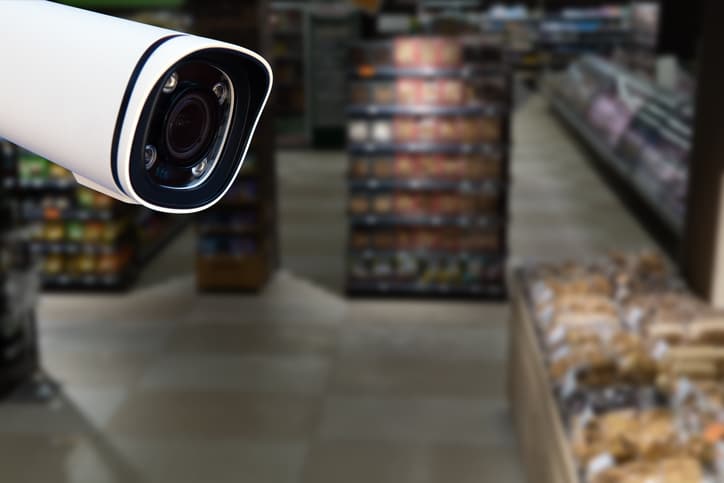
Video surveillance for retail stores gives owners and managers access to both real-time and recorded footage. That enables reviewing incidents, monitoring customer and employee activity, and better understanding what is happening across the business.
This can be useful in many ways. If merchandise goes missing, video may help narrow down where and when the loss occurred. If there is a dispute at the register, recorded footage can support a more informed review. If suspicious behavior keeps happening in the same area of the store, management can identify patterns and decide whether a change in layout, staffing, or policy is needed.
Video also improves accountability. It provides staff and management with a shared reference point when questions arise, reducing confusion and supporting clearer internal processes.
Placement matters here. Cameras should be positioned to cover entrances, checkout areas, high-value merchandise, and low-visibility zones without creating unnecessary or intrusive coverage. Professionally planned placement makes the system more useful and helps avoid blind spots that limit the value of recorded footage.
The real advantage of a modern system often comes from integration. Video and intrusion detection are valuable on their own, but together they create a much more useful security solution.
If an alarm is triggered, video can help verify the cause. Instead of responding to an alert with little context, a business owner or monitoring team can review footage to see whether there is a real issue, what area is involved, and how serious the situation appears to be.
This can support faster and more informed responses. It can also reduce the disruption of false alarms. If a door was opened accidentally or motion was triggered in a non-threatening situation, video can help confirm that before unnecessary action is taken.
When a real incident does occur, combining video with intrusion detection provides stronger documentation. The alarm shows when the activity happened. The footage helps show what happened. Together, they give the business a clearer record of the event.
That combination is one reason so many retailers are moving toward layered systems rather than relying on a single stand-alone device.
Small retailers often manage a lot with limited time and staffing. Even with a strong system in place, someone still needs to know what to do when an alarm goes off, especially after hours.
Professional monitoring helps address that challenge. Instead of depending entirely on the owner to receive and interpret every alert, a monitoring team can respond when the system is triggered and help move the response process forward.
This is particularly important overnight, on weekends, or during times when the owner is away from the store. Self-monitoring can work in some situations, but it also puts pressure on the business owner to be always available and ready to decide what to do in real time.
With monitored systems, alerts can be handled more consistently, and coordination with local emergency responders can happen more efficiently when needed. For small retailers, that extra support can make security feel more manageable and less reactive.
For businesses evaluating their small business security systems in Johnstown, monitoring is often one of the most important upgrades because it extends protection beyond the moments when the owner is personally available to respond.
Many retailers do not realize their system is outdated until a problem exposes the gaps. In other cases, the signs build gradually.
An increase in theft, shrink, or suspicious activity is one clear indicator. If losses are growing or incidents are becoming harder to track, the current setup may not provide sufficient visibility.
Store growth can also create new vulnerabilities. More inventory, a larger layout, or added access points may make an older system less effective than it once was.
Outdated or unreliable equipment is another reason to re-evaluate. If alerts are inconsistent, footage is unclear, or the system is difficult to use, it may not provide the support the business needs.
A lack of remote access is also a common issue. Many owners want the ability to check in on the store, review footage, or confirm an alert without being on-site. If the current system cannot do that, an upgrade may offer real operational benefits.
SSA works with retailers that need more than a basic alarm at the front door. Our focus is on creating systems that align with the store’s layout, risk areas, and daily operations, rather than applying the same setup to every business.
For some retailers, that may mean improving intrusion-detection coverage by installing sensors beyond the main entrance. For others, adding video surveillance, integrating multiple tools into a single system, or adding professional monitoring for after-hours support.
Scalability matters for small businesses. A system should fit the current store while leaving room for future needs. That is especially important for retailers who may expand inventory, rework their layout, or grow into multiple locations over time.
SSA also provides local service and support to retailers in the Johnstown area, which can be especially valuable for business owners seeking guidance from a provider that understands local business needs.
Door alarms still have a role in retail security. They can be a useful starting point and a practical part of a broader system. But for many small retailers in Johnstown, they are no longer enough on their own.
A layered system offers more comprehensive protection by combining intrusion detection, video surveillance, and monitoring into a single, connected approach. That gives business owners better visibility, better documentation, and more confidence in how their store is protected.
For retailers considering an upgrade, the goal is not to overcomplicate security. It is to move from basic alerts to a system that better supports the realities of running a modern retail business. Thoughtful improvements now can help reduce risk, improve response, and create a stronger foundation for the future.
Call Security Systems of America today to get started.