
For many businesses, video surveillance is often thought of as a security measure. While security is certainly part of its purpose, modern surveillance systems can do much more than help prevent theft or monitor entrances. For small businesses, commercial properties, offices, warehouses, and nonprofit facilities in Johnstown, recorded footage can also serve as a practical business tool.
When an incident occurs, managers often need clear answers quickly. What happened? When did it happen? Who was involved? Was there a safety concern, a customer complaint, property damage, or an employee issue? Without reliable documentation, businesses may have to rely on memory, assumptions, or conflicting accounts.
Video surveillance systems in Johnstown, PA, help business owners and managers review events, verify details, support investigations, and make more informed decisions. When properly designed and configured, a surveillance system can improve visibility across a property and help resolve incidents with less confusion.
Traditional conversations about surveillance often focus on whether security cameras can discourage theft or trespassing. That matters, but it is only one part of the value a modern commercial camera system can provide.
Today’s business video surveillance systems are also used for operational visibility, documentation, accountability, and incident verification. For a business owner who cannot be everywhere at once, recorded footage can provide a clear record of what happened in a specific area at a specific time, which can be especially useful for Johnstown businesses with limited staffing resources. A retail owner may need to understand what happened near a checkout area while employees were helping customers. A property manager may need to review parking lot activity after a tenant reports damage. A warehouse manager may need to verify whether a delivery was received, stored correctly, or moved to the wrong area.
In these situations, surveillance is not just about watching for security threats. It is about having access to dependable information when questions arise.
Customer complaints can be difficult to manage when there are different versions of what happened. A customer may report a slip near an entrance, damage to a vehicle in a parking area, a missing item, or a problem during a service interaction. Employees may remember the event differently, or they may not have witnessed it at all.
Recorded footage gives businesses a way to review the situation objectively.
For example, if a customer reports a slip-and-fall incident, footage may help verify the timing, location, surrounding conditions, and whether staff responded appropriately. If a parking lot incident is reported, cameras may help determine whether another vehicle, pedestrian, cart, or delivery truck was involved. In a service-related complaint, footage may help confirm how long a customer waited, which employee assisted them, and whether the concern matches the recorded timeline.
This does not mean video footage solves every complaint. Some issues require conversation, judgment, and customer service. However, footage can provide important context and reduce the guesswork that often slows resolution.
For Johnstown businesses that depend on strong customer relationships, this can help managers respond more measuredly and informed. Instead of making decisions based only on incomplete information, they can review available evidence and address the concern with greater confidence.
Employee-related incidents can also benefit from clear documentation. Workplace disagreements, safety concerns, policy violations, and questions about timing or access can become complicated without a reliable record.
Commercial security cameras in Johnstown can support HR and management teams by helping verify timelines and activity in shared spaces. For example, footage may help clarify when an employee entered a restricted area, whether a safety procedure was followed, or what occurred before and after a workplace incident.
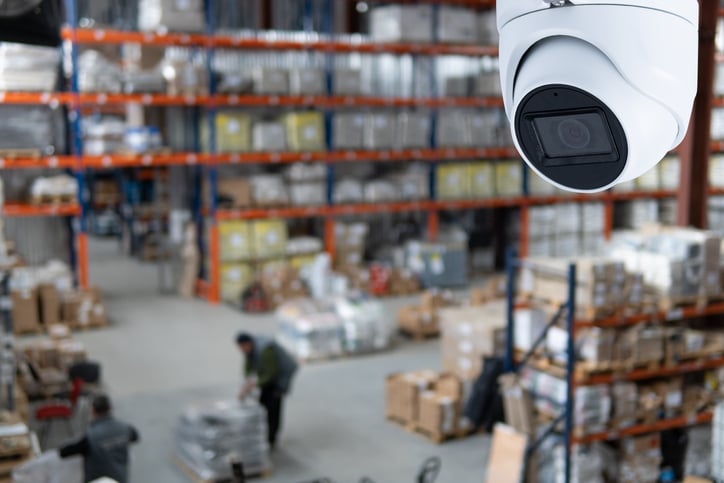
In a warehouse or industrial setting, video footage may help determine whether employees used equipment properly, whether a loading area was clear, or whether a reported safety concern needs additional follow-up. In an office or nonprofit environment, footage may help verify access to certain areas or provide context for a reported interaction in a common space.
It is important to note that surveillance should not replace good management practices. Employee communication, written policies, training, and fair procedures still matter. Video should be used as one piece of the overall review process, not as a substitute for leadership or HR judgment.
When handled appropriately, business video surveillance can help organizations apply policies consistently and reduce uncertainty during sensitive investigations.
While this article focuses on operational and documentation benefits, surveillance footage remains valuable during security-related incidents. Theft, vandalism, unauthorized access, and after-hours activity can disrupt a business. When footage is easy to find and review, managers can respond faster and provide better information to law enforcement, insurance providers, or internal stakeholders.
For example, if merchandise goes missing from a retail store, recorded footage can help narrow down when the loss occurred and who was in the area. If a door is accessed after hours, footage can help determine whether the access was by an employee, vendor, tenant, or an unauthorized individual. If vandalism occurs outside a building, camera footage may help document the incident and support the next steps.
This type of review is often most useful when the system has been designed with the business’s layout and daily activity in mind. Cameras should be placed to capture meaningful information, such as entrances, exits, transaction areas, parking areas, loading zones, hallways, and other key points of activity.
Businesses interested in broader surveillance planning can learn how to monitor their operations with modern surveillance technology.
For many Johnstown businesses, the goal is not constant monitoring. The goal is to have reliable footage available when something needs to be reviewed.
Liability concerns are a major reason businesses invest in commercial camera systems. When an incident results in an insurance claim, an injury report, a customer dispute, or a property damage concern, documentation matters.
Video evidence for liability claims can help establish a clear timeline. It may show when an incident occurred, who was present, whether warning signs were visible, how quickly staff responded, or whether reported damage happened on the property, which can be useful for both internal records and third-party review.
For example, if a tenant reports damage in a mixed-use commercial property, footage may help determine whether the damage happened during business hours, after hours, during a delivery, or during maintenance work. If a customer files a claim that is related to a fall, footage may help verify the area’s conditions before and after the incident.
This documentation can support risk management by helping businesses identify patterns. If footage shows repeated congestion near an entrance, unsafe behavior in a loading zone, or recurring problems in a parking area, management can take steps to reduce future risk.
In this way, the benefits of security cameras extend beyond crime prevention. Footage can help business owners understand how incidents happen and what changes may help prevent similar issues in the future.
A surveillance system is only useful if the footage can be found, reviewed, and shared when needed. Poorly configured systems can create frustration at the exact moment a business needs answers.
Several factors affect how useful footage will be during an investigation.
The retention period is one of the most important factors. If footage is overwritten too quickly, a business may lose access before a complaint, claim, or report is made. Different businesses may need different storage timelines depending on their risk level, industry, operating hours, and incident history.
Searchability also matters. Managers should be able to review footage by date, time, camera location, or event when possible. If a system is difficult to navigate, staff may spend unnecessary time looking for the right clip.
Remote access can also be valuable for business owners, property managers, and operations leaders who are not always on-site. Being able to review footage from a secure remote platform can help decision-makers respond quickly without needing to travel to the location first.
Proper system configuration is just as important as the cameras themselves. A camera pointed in the wrong direction, placed too high, blocked by shelving, or set with poor image quality may not provide useful evidence. Professional system design helps ensure that cameras, storage, access, and coverage are aligned with how the business actually operates.
Many Johnstown businesses operate in practical, real-world conditions where every resource matters. A small retail shop may have only a few employees on-site at a time. A property manager may oversee several buildings or mixed-use spaces. A nonprofit may need to keep staff, volunteers, visitors, and property organized without adding unnecessary administrative burden.
In these environments, video surveillance systems can help fill visibility gaps. Footage can help managers understand what happened when no supervisor was present, when staff were busy, or when an issue was reported after the fact, which is especially helpful for businesses with shared parking areas, multiple entrances, delivery zones, public-facing spaces, or after-hours access. Rather than relying on secondhand information, owners and managers can use recorded footage to verify details and take practical next steps.
SSA designs and installs commercial surveillance systems that help businesses improve visibility, documentation, and incident response. For businesses in and around Johnstown, that may include commercial security cameras, remote video access, video storage solutions, integrated commercial security systems, and professional system design.
The right system depends on the property, the business type, the areas to be covered, and how the footage will be used. A retail business may need clear coverage of entrances, registers, aisles, and parking areas. A warehouse may need cameras at loading docks, inventory zones, and access points. A professional office may need coverage of entrances, reception areas, and shared building spaces.
SSA can help evaluate these needs and recommend a system that supports both security and daily operations.
Video footage can help Johnstown businesses resolve incidents faster, improve operational oversight, reduce uncertainty, and support documentation when claims or disputes arise. The key is to have a system designed around real business needs, not just basic camera placement.
If your current system is difficult to use, does not provide enough coverage, or does not retain footage long enough, it may be time to review your setup.
Request a video surveillance assessment from SSA to improve incident visibility, optimize camera coverage, and strengthen operational oversight. You can also speak with a Johnstown surveillance specialist to discuss commercial camera systems that fit your property, staff, and day-to-day needs.